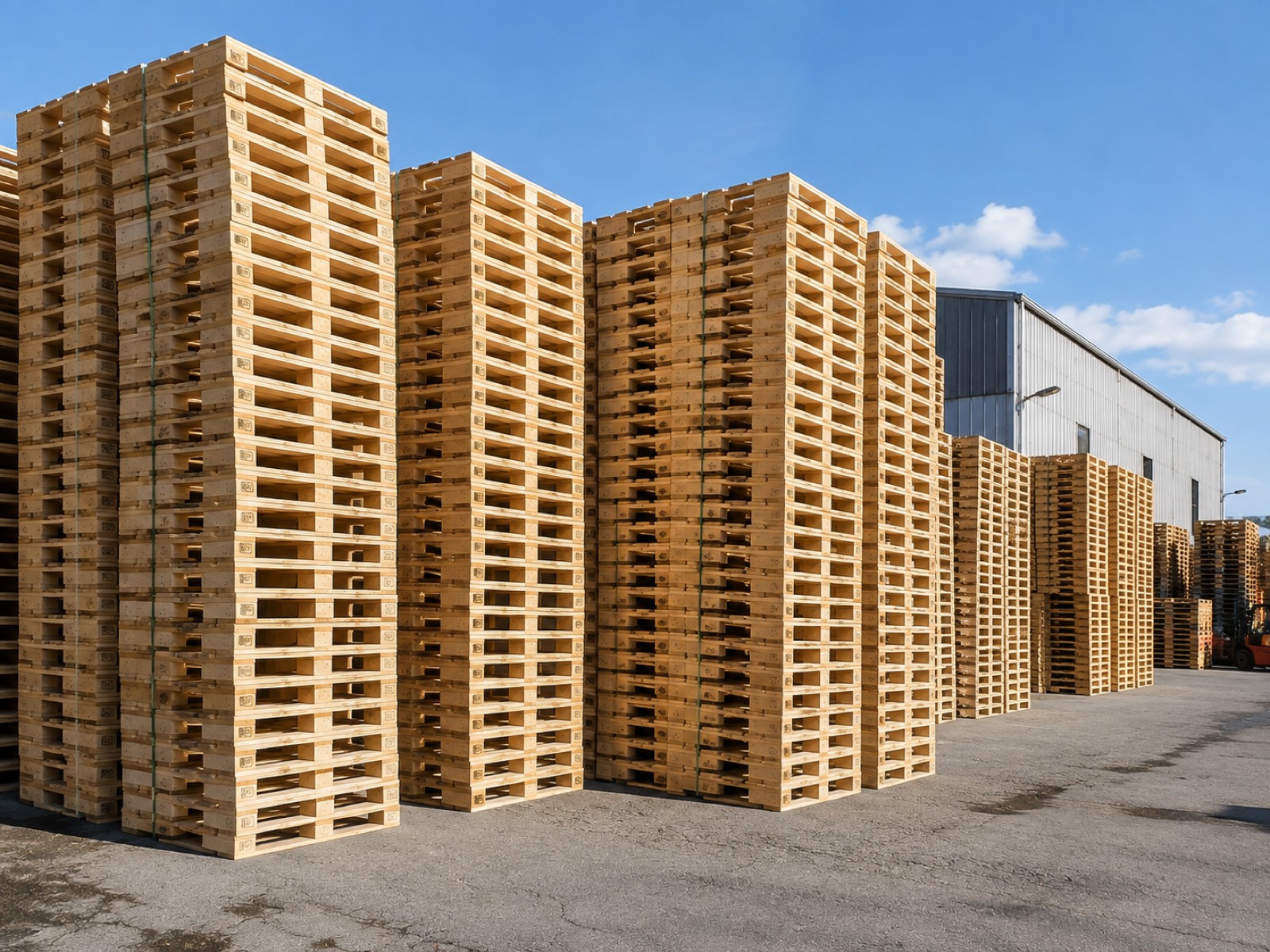
Carbon: the biggest lever
The carbon in a new pallet mostly comes from harvesting, transporting, drying, and milling fresh lumber. A recycled pallet skips almost all of that — it is repaired, not remade — so its footprint per cycle is a fraction of new. Across a supply chain moving thousands of pallets, switching to recycled is a measurable emissions cut.
Landfill diversion
Wood pallets are bulky. When they hit landfill they take up volume and, as they break down anaerobically, release methane — a potent greenhouse gas. Recycling keeps that wood cycling instead. Even genuinely end-of-life pallets get ground into mulch or biomass rather than buried, so very little is truly wasted.
- 30–50 lb of wood kept in use per recycled pallet
- Methane avoided by keeping wood out of landfill
- End-of-life wood recovered as mulch or biomass
The circular economy in one object
A pallet is a near-perfect circular product: durable, repairable, standardized, and made of a renewable material. A managed recycling and retrieval loop keeps the same physical asset in service for years, which is the essence of circularity — designing waste out of the system rather than managing it at the end.
Reporting the impact
The reason this matters commercially: the numbers are reportable. A managed program yields units recovered and tonnage diverted that drop straight into ESG and Scope 3 reporting, and increasingly into the retailer scorecards that decide who wins shelf space. Use our impact calculator to estimate your own diversion figures.
Carbon storage in a wood pallet
There is a benefit that new lumber and recycled wood share but that plastic cannot claim: the wood itself is stored carbon. As a tree grows it pulls carbon dioxide from the air and locks the carbon into its fibers, and that carbon stays put for as long as the wood stays in service. Every year you keep a pallet repaired and working is another year that carbon remains out of the atmosphere rather than being released.
This is why extending a pallet’s service life is quietly one of the most effective things a wood-based supply chain can do. Recycling does not just avoid the emissions of making a new pallet; it prolongs the storage of the carbon already captured in the existing one. When the wood finally becomes mulch or biomass, that carbon returns to the cycle, but a well-run loop delays that return by years and displaces a great deal of fresh harvesting in the meantime.
Where the wood comes from
A fair sustainability case has to acknowledge the front end of the supply chain, not just the recycling loop. Pallet lumber is typically low-grade wood and mill residue — the parts of a log that would otherwise have limited use — so pallets already make good use of material that might be wasted. Recycling extends that efficiency by squeezing many service lives out of each board before it is retired.
Responsible sourcing matters for the small share of new lumber that still enters the system to make repairs and remanufactured units. Certification schemes that verify sustainably managed forests give assurance that fresh boards are not driving deforestation. The combination of low-grade feedstock, certified new wood where needed, and aggressive reuse is what makes the overall footprint so favorable compared with materials that start from extracted fossil feedstock.
- Pallets use low-grade lumber and mill residue
- Recycling multiplies the value of each board
- Certified sourcing covers the small share of new wood used in repairs
Building a program that holds up to scrutiny
Sustainability claims are increasingly audited, so the difference between a real program and greenwashing is documentation. A credible recycled-pallet program tracks units collected, units returned to service, and tonnage diverted from landfill, and it ties those figures to specific pickups and deliveries rather than round estimates. That paper trail is what turns a good intention into a defensible number in a report.
The practical path is to consolidate supply and recovery with a partner who measures the loop and reports it back to you. When collection, repair, and re-delivery run through one system, the data is consistent and the story is honest: this many pallets recovered, this much wood kept in use, this much material kept out of the ground. We build accounts to produce exactly that kind of evidence so your sustainability team is never guessing.
Put this into practice
Ready to act on it? Request a quote or browse our services and products.