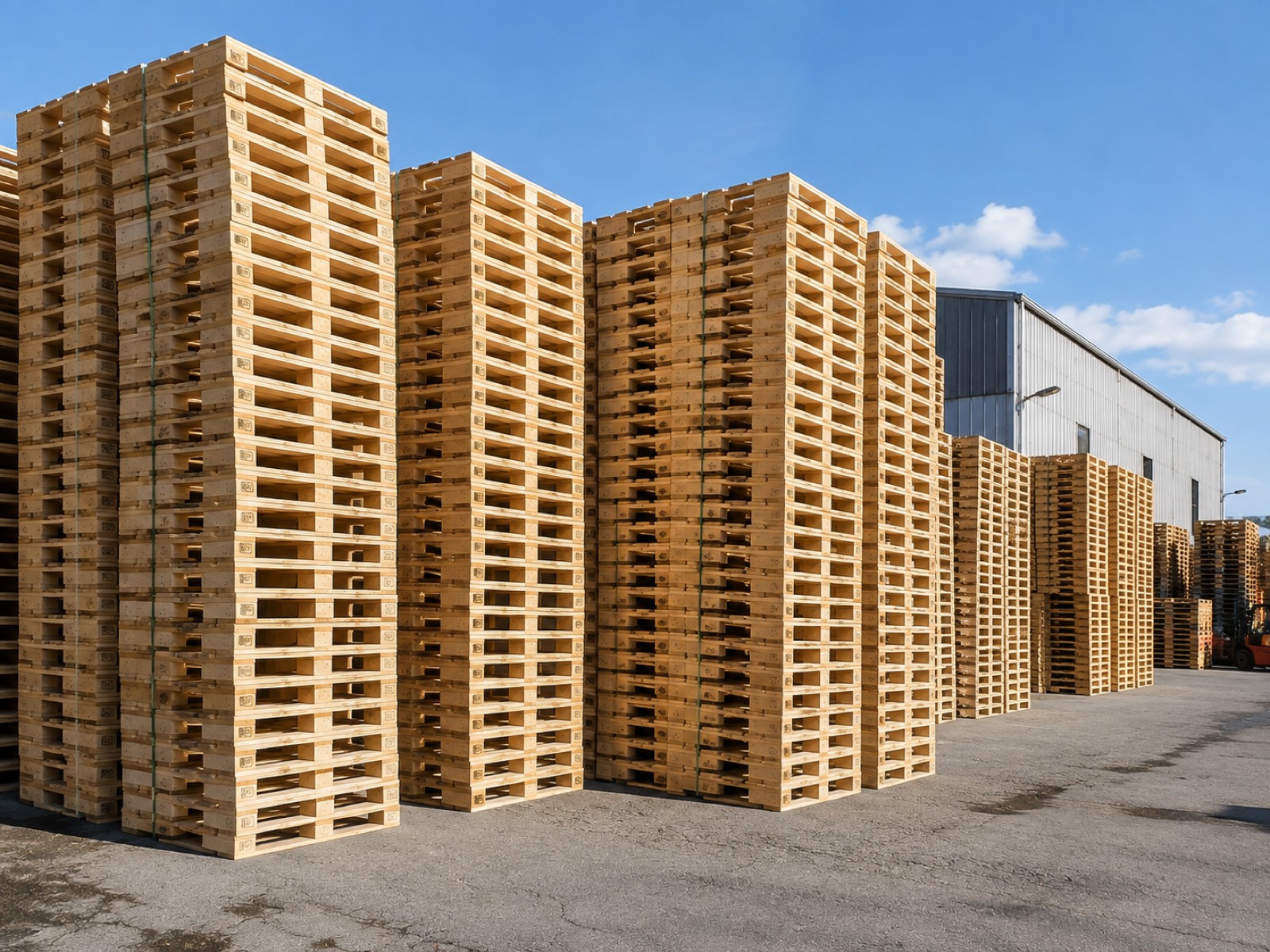
1. Switch to recycled where it fits
The single biggest lever. Recycled pallets cost a fraction of new and perform identically for most loads. Reserve new wood for the applications that genuinely require it.
2. Match the grade to the job
Do not pay for Grade A on a one-way outbound shipment that will never come back. Right-grading — Grade B where looks and automation do not matter, Grade A only where they do — trims spend on every order.
3. Sell your surplus
Empties on your dock are inventory, not trash. Selling recoverable units turns a disposal cost into a per-unit payment.
4. Consolidate with one partner
Running supply, removal, and recycling through a single provider removes duplicate hauls and overhead — and gives you one number to negotiate instead of three.
5. Use backhaul routing
Pair pallet deliveries with empty pickups on the return leg so one trip does two jobs. Fewer empty miles means lower freight cost and lower emissions.
6. Run a retrieval loop
If you ship a lot of pallets to repeating destinations, recovering them instead of buying replacements plugs a major cost leak and turns a one-way expense into a circular asset.
7. Right-size the pallet
An over-built pallet is wasted wood and money; an under-built one fails and costs you product. Spec the lightest pallet that carries your load safely — we can help you engineer it.
- Switch to recycled
- Right-grade every order
- Sell surplus
- Consolidate partners
- Backhaul freight
- Retrieve assets
- Right-size the spec
Find the hidden costs first
Before chasing the unit price down, look for the costs that never show up on a pallet invoice. Storage space consumed by piles of empties, labor spent shuffling and staging them, and dumpster or disposal fees for broken units are all real pallet costs hiding under other budget lines. Product damage from failed or wrong-spec pallets is another, and it is usually the most expensive of all because it destroys the goods on top, not just the pallet.
The point of mapping these is that the cheapest pallet is not always the lowest total cost. A slightly better unit that fails less, or a managed removal that reclaims floor space and labor, can beat a rock-bottom price once the hidden costs are counted. Adding up the full picture — purchase, handling, storage, disposal, and damage — is what reveals where the real savings live.
- Floor space tied up by empty piles
- Labor spent shuffling and staging pallets
- Disposal fees for broken units
- Product damage from failed or wrong-spec pallets
Standardize to shrink your inventory
Every extra pallet size and style you carry multiplies cost. More SKUs mean more safety stock, more storage lanes, more sorting time, and less buying leverage on each individual type. Many operations accumulate a patchwork of sizes over the years without ever asking whether they still need all of them, and the answer is often no.
Consolidating toward one or two well-chosen standards — usually the 48x40 for its deep, cheap, easy-to-source market — reduces the working inventory you have to finance and store. It also makes your surplus more valuable, because a clean stream of one common size sells for more than a mixed jumble. Where a specialty size earns its keep, keep it; where it is just legacy clutter, retiring it frees cash and space at once.
Negotiate on volume and predictability
Pallet pricing responds strongly to how easy you are to serve. A supplier can quote a better rate to a customer with steady, forecastable volume than to one placing erratic rush orders, because predictability lets the supplier plan routes, inventory, and repair flow efficiently. Sharing a realistic forecast and committing to a cadence is often worth more at the negotiating table than squeezing on a single order.
Pairing purchase volume with recovery volume strengthens your position further. When you both buy pallets from and return empties to the same partner, you are handing them two revenue-and-material streams that share trucks and handling, and that efficiency can come back to you as price. Ask to be quoted on the combined relationship, not order by order — the whole is usually cheaper than the sum of the parts.
Measure, review, and keep it tuned
Cost control is not a one-time project; it drifts if left alone. Prices move, your shipping lanes change, and volumes shift with the season, so a program that was optimal last year may be leaking money now. A simple quarterly review of cost per pallet, mix of grades used, surplus sold, and recovery rate keeps the gains from eroding.
The discipline that pays off is tracking a few numbers over time rather than reacting to individual invoices. When you can see cost per shipped unit trending, you spot creep early and can act before it compounds. A partner who reports these figures back to you turns pallet management from a recurring guess into a managed line item you actually control.
- Review cost per pallet quarterly
- Watch your grade mix and recovery rate
- Track surplus revenue against spend
Put this into practice
Ready to act on it? Request a quote or browse our services and products.