Service
Pallet Recycling Services
Every board gets a second look before it ever becomes waste.
The short answer
Pallet recycling is the process of collecting used wood pallets, sorting them by condition, repairing what can be fixed, remanufacturing what cannot, and grinding only the true end-of-life material into mulch or biomass. Evergrain runs this loop as a managed program: we pick up your empties, keep serviceable units in circulation, and give you documented diversion numbers you can put in a sustainability report.
Request a quote
Fill this out and we’ll reply by email with a plan and a price. It’s the same form you’ll find on every page — no phone tag required.
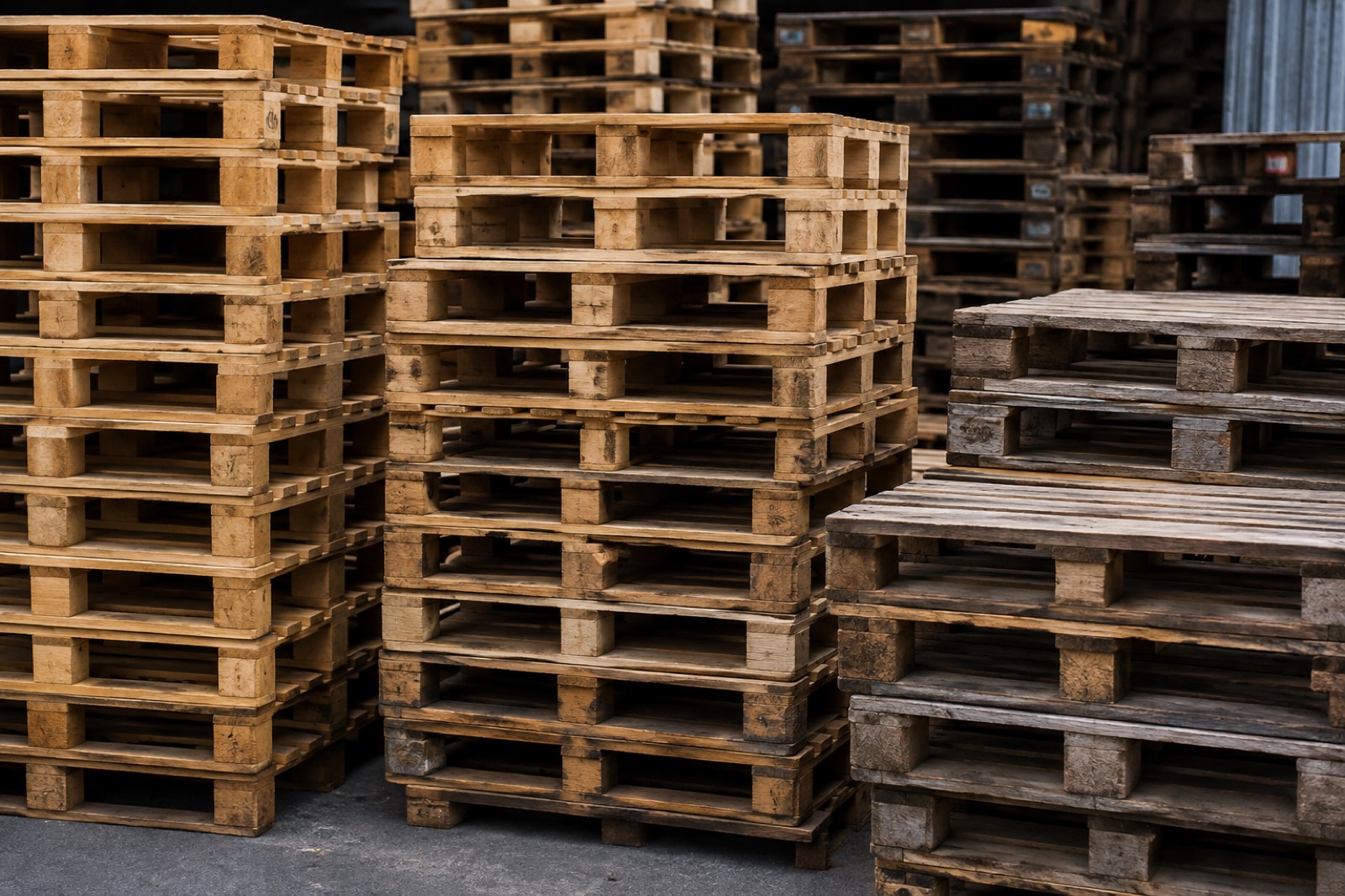
What actually happens to a recycled pallet
A pallet almost never fails all at once. A single cracked deck board or a split stringer is enough to pull it from a shipping line — but the other 90% of the wood is still perfectly sound. Recycling exists to recover that value instead of throwing it away.
When your empties reach our Memphis yard, they move through a triage line. Sound units are cleaned and returned to inventory. Repairable units get new boards or stringer repairs and a fresh grade. Units too far gone are dismantled: usable boards are salvaged for repairs, and the rest is ground into landscape mulch or biomass fuel. Nothing that can be reused is thrown out.
- Inbound sort by size, style, and condition
- Board-level repair with reclaimed and new lumber
- Re-grading to A, B, or remanufactured spec
- Dismantling and grinding for true end-of-life stock
Why recycling beats buying new every time
A recycled 48x40 costs a fraction of a new one and carries a dramatically lower embodied-carbon footprint, because the timber has already been harvested, dried, and milled. You are paying for handling and repair, not for a freshly cut tree.
For most shippers, moving from a buy-new model to a managed recycling loop cuts pallet spend by 30–60% while turning a disposal cost into either a break-even or a small rebate. It is one of the rare sustainability moves that also lowers the invoice.
A managed loop, not a one-off haul
The real savings come from treating pallets as a circulating asset rather than a consumable. We set up scheduled pickups sized to your throughput, keep your preferred specs in stock for outbound, and reconcile the counts so you always know how many units are in play.
How grading works inside the loop
Grading is the quiet engine that makes recycling profitable instead of wasteful. Every inbound unit is judged against a written standard, not a gut feel, so the same pallet gets the same grade whether it arrives on a Monday or a Friday. That consistency is what lets us promise a Grade A load actually looks like Grade A.
Our sorters read a handful of signals fast: stringer integrity, deck-board count and cracking, fastener condition, and overall squareness. A unit with tight, sound stringers and full deck coverage rides straight back into service. One with a single split board drops to the repair line, and one with rotted or broken stringers heads to dismantling. Nothing gets a pass it did not earn.
This discipline matters to you because it protects your product. A mis-graded pallet failing mid-shipment is far more expensive than the pallet itself once you count the damaged goods, the delay, and the cleanup. Rigorous grading is cheap insurance against that.
- Stringer integrity checked for splits, breaks, and rot
- Deck-board count, spacing, and cracking assessed
- Fastener condition and protruding nails flagged
- Squareness and overall structural soundness confirmed
How we quote a recycling program
There is no flat national price for pallet recycling, and anyone who quotes one sight-unseen is guessing. Your number depends on three things: the mix of sizes and grades in your stream, the volume and cadence of your pickups, and your distance from our Memphis operation or a partner yard. A dock that generates clean 48x40 cores every week looks very different on paper from a site that produces mixed, damaged, odd-size loads once a quarter.
When you reach out, we start with a short profile of what you ship and receive and roughly how many empties accumulate. From there we can usually put a range in front of you within the same week, and if the volume justifies it we will schedule a walk-through or ask for photos to tighten the estimate. Loads rich in in-demand sizes may earn a rebate; low-value or contaminated loads may carry a modest handling fee that still lands well under landfill tipping costs.
Common mistakes that cost shippers money
The most expensive habit we see is treating every empty as trash and paying to dumpster it. A large share of what goes into those roll-offs is fully serviceable wood with real resale value, so companies are literally paying to throw away an asset. Sorting at the source, or letting us sort for you, almost always beats blind disposal.
The second common trap is buying new pallets while simultaneously scrapping used ones of the same size — a leak on both ends of the same pipe. If you are purchasing 48x40s at the front door and skidding them out the back, a managed loop can often close that gap and cut spend on both sides at once. The third is waiting until pallets are piled to the rafters before acting, which turns a routine pickup into a safety and pest problem. A steady cadence is cheaper and calmer than a crisis clear-out.
The bigger sustainability picture
Wood pallets are one of the great unsung success stories of the circular economy. A single well-made unit can carry freight through five to seven lives before its boards are finally ground into mulch or biomass, and even that end state returns the material to productive use rather than a landfill cell. Recycling is what keeps that long life possible.
Because the timber in a recycled pallet was harvested, dried, and milled years ago, reusing it avoids the carbon cost of cutting and processing new wood. Every unit kept in circulation is a small standing decision not to consume a fresh tree. Multiply that across a fleet and the avoided footprint becomes something you can genuinely report, which is why we hand managed accounts documented diversion figures rather than vague green claims.
How it works
A simple, managed loop
- 01
Audit
We look at what you ship, what you receive, and where empties pile up.
- 02
Collect
Scheduled pickups or on-demand hauls clear your dock on your cadence.
- 03
Recover
Sort, repair, and remanufacture keep serviceable units in circulation.
- 04
Report
You get diversion tonnage and unit counts for your ESG reporting.
FAQ
Frequently asked questions
Do you charge to recycle my pallets?
It depends on volume, mix, and location. High-demand sizes in good condition often earn a rebate; mixed or damaged loads may carry a small handling fee that is still far below landfill tipping costs. We quote every account individually.
What sizes do you recycle?
The 48x40 GMA footprint is the workhorse, but we handle nearly every common size and many odd ones. If you are not sure what you have, send a photo through the form above and we will identify it.
Can I get proof of diversion for reporting?
Yes. Managed accounts receive periodic summaries of units recovered and estimated tonnage diverted from landfill, formatted so you can drop it straight into a sustainability report.
How is recycling different from just disposal?
Disposal treats every pallet as trash and pays to bury or burn all of it. Recycling recovers the value first — sound units go back into service, repairable units are fixed, and only the true end-of-life wood is ground for mulch or biomass. You keep the asset working instead of paying to destroy it.
What happens to pallets that are too broken to reuse?
They are dismantled rather than dumped. Any sound boards are salvaged to repair other pallets, and the remaining wood is ground into landscape mulch or biomass fuel. It stays a useful material instead of becoming landfill.
Do you handle contaminated or wet pallets?
Often, yes, though it affects the quote. Lightly soiled or damp units can usually be recovered; heavily contaminated wood, chemical spills, or infestation may limit what we can recycle and add a handling fee. Tell us the condition up front so there are no surprises.
How often should I schedule pickups?
That depends on how fast empties accumulate. High-volume warehouses often run weekly or biweekly, while smaller sites do fine with on-demand calls. We size the cadence to your throughput so pallets never pile up into a hazard.
Can recycling be combined with buying stock from you?
Yes, and that is usually the most efficient setup. We recover your empties on one leg and deliver graded replacement stock on the other, so a single relationship covers both ends of your pallet flow and often cuts freight cost through backhaul routing.
Ready to give your pallets another life?
Buy, sell, recycle, or haul — start with a fast, no-obligation quote and we’ll take it from there.