Cost
Wood wins decisively on purchase price, and recycled wood wins by the widest margin. A plastic pallet can cost several times a new wood pallet and many times a recycled one. Plastic can pay back — but only if it survives enough controlled cycles, which requires a closed loop where it does not get lost.
Durability and repairability
Plastic resists moisture, does not splinter, and holds precise dimensions cycle after cycle, so a single unit can outlast several wood pallets in a controlled loop. But when a plastic pallet finally cracks, it usually cannot be repaired — it must be reground. A wood pallet, by contrast, is endlessly repairable one board at a time, which is exactly what makes recycling so effective.
- Wood: repairable board-by-board, 5–7 lives via recycling
- Plastic: very durable but not repairable — regrind at end of life
Hygiene
This is plastic’s clearest advantage. Washable, non-absorbent, and free of nails and splinters, plastic pallets suit pharmaceutical, food-processing, and clean-room settings. Wood can be heat-treated and kept clean, but it cannot match plastic for wash-down hygiene.
Sustainability
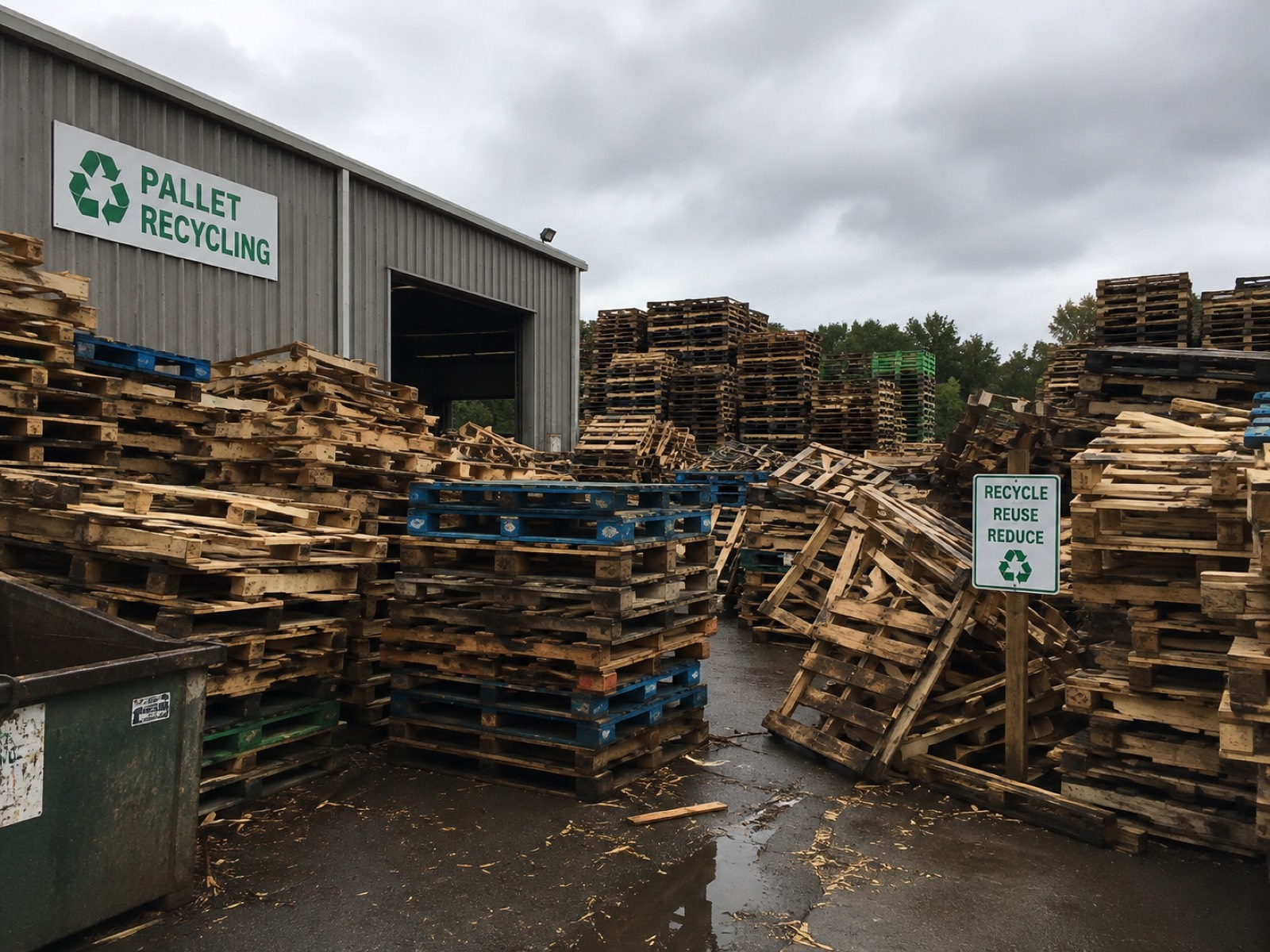
This is where the honest answer surprises people. Wood is renewable, and recycled wood carries very low embodied carbon because the timber is already in circulation and is repaired rather than remade. Plastic carries a heavier upfront footprint that only amortizes across many cycles — and in open systems where pallets vanish, that payback never arrives.
The greenest choice for most open or one-way supply chains is recycled wood. The greenest choice for a truly closed, high-cycle hygienic loop may be plastic. Context decides.
The verdict
Use recycled wood for open, cost-driven, or one-way supply chains — it is cheaper and greener. Use plastic for hygiene-critical, automated, closed-loop systems where its durability and washability pay off. Anyone who tells you one material is universally superior is selling that material.
Weight, freight, and handling
Weight is an underrated part of the comparison because it shows up on every freight invoice. A structural plastic pallet built to carry heavy racked loads can weigh as much as or more than wood, while lightweight nestable plastic trays weigh far less. That difference matters when you ship pallets by the thousand and pay by the pound, and it also affects how much product weight you can add before hitting a trailer or floor limit.
Handling ergonomics differ too. Plastic has no protruding nails or splinters, so it is gentler on gloves, film wrap, and hands, and its smooth surface releases cleanly from automated grippers. Wood is grippier under a load, which can be an advantage for stacked stability, but it demands more attention to fasteners and broken boards on the line. Neither is universally easier — it depends on whether your bottleneck is worker safety, automation reliability, or raw stacking friction.
- Plastic: no nails or splinters, smooth for automation
- Wood: grippier under load, watch for shiners and broken boards
- Weight varies widely within each material — check the spec
Fire, temperature, and static
Environmental extremes expose real differences. Wood tolerates a wide temperature range without deforming and behaves predictably in cold storage, but it absorbs moisture, which adds weight and can invite mold if it is stored wet. Plastic ignores moisture entirely, making it the obvious pick for wash-down and freezer-to-ambient cycling where wood would swell and dry repeatedly.
Fire and static are the counterweights. Standard plastic pallets are combustible and can complicate warehouse fire-protection design, sometimes requiring specific sprinkler ratings that wood does not, though fire-retardant grades exist at a premium. Some clean or electronics environments also care about static dissipation, another spec available in plastic but not a factor for wood. These are edge cases for many shippers, but where they apply they can override every other consideration.
End of life and recovery value
What happens when the pallet finally wears out is part of the total cost. A wood pallet has residual value at every stage: sound units resell, damaged ones are repaired, and truly spent wood grinds into mulch or biomass, so almost nothing is stranded. There is an active market that will pay for your worn wood, which effectively lowers its lifetime cost.
A plastic pallet at end of life is a different story. Intact used units retain resale value, but a cracked plastic pallet is generally reground rather than repaired, and recovery depends on having a clean single-resin stream and a recycler who will take it. That can be a real closed-loop asset or a disposal headache depending on your region and volume. Before you commit to plastic, confirm the end-of-life path as carefully as you price the purchase, because a pallet you cannot recover cheaply is more expensive than it looks.
Put this into practice
Ready to act on it? Request a quote or browse our services and products.