Service
Sell Your Used Pallets
Your empties are inventory. Get paid for them.
The short answer
If pallets are stacking up on your dock, Evergrain will buy the ones with resale value and haul the rest. We pay per unit for in-demand sizes and grades, provide a documented count, and can set up recurring pickups so surplus never becomes clutter again.
Request a quote
Fill this out and we’ll reply by email with a plan and a price. It’s the same form you’ll find on every page — no phone tag required.
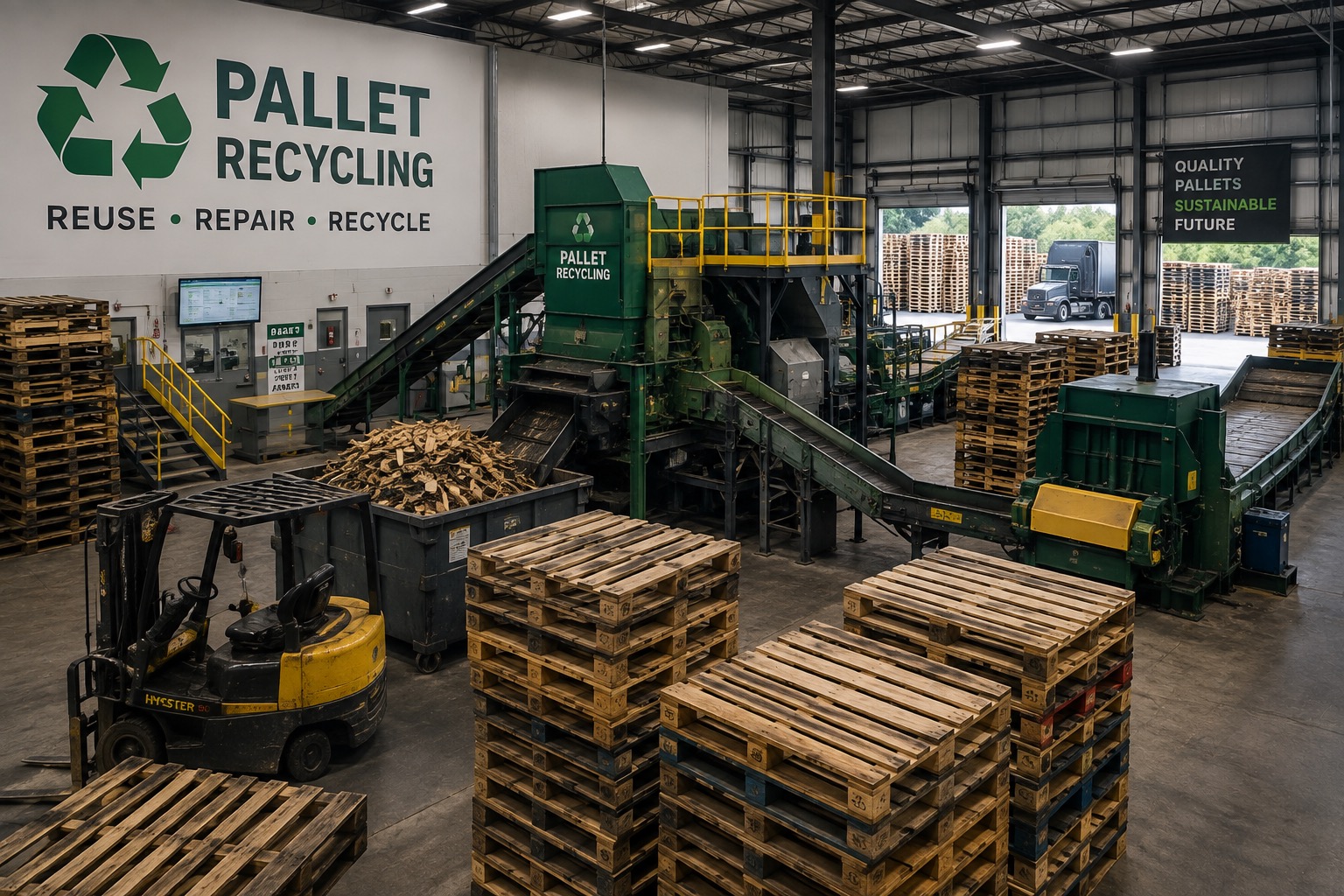
What we buy
Demand is highest for the 48x40 GMA footprint, but we buy across a wide range of sizes and conditions. "Cores" — used pallets destined for repair — are our bread and butter, and even mixed or damaged loads have value once the recoverable wood is separated out.
- 48x40 GMA cores (highest value)
- Block and Euro-style pallets
- Oversized and specialty footprints
- Mixed loads — we sort so you do not have to
Honest counts, clean pickups
Every load is counted and documented, so you know exactly what left your yard and what it was worth. Our drivers handle the loading, sweep the area, and keep your dock clear — the whole point is to remove a headache, not add one.
Turn a cost center into a credit
Most operations treat pallet disposal as pure cost. Selling your surplus flips that: recoverable units earn a per-unit payment, and consolidating removal with a single partner cuts the hauling overhead you were already paying.
How we value your pallets
A fair per-unit price comes down to four factors: size, grade, quantity, and where you are located. The 48x40 GMA core sits at the top because demand for it never lets up, while specialty and oversized footprints trade in thinner markets and price accordingly. Larger, cleaner, more consistent loads earn more per unit because they cost us less to sort and move.
To quote you, we need a rough count and, ideally, a few photos so we can gauge the mix and condition. From there we can usually put a per-unit figure or a range in front of you within the same week. Because used pallets track the broader lumber market, we will tell you honestly when prices are strong and it is a good time to move volume, and when a size is soft.
- Size — 48x40 GMA cores command the most
- Grade and condition — cleaner loads pay more
- Quantity — full loads beat small, mixed piles
- Location — distance to our yard affects net value
What to expect from first contact to payment
The process is deliberately simple. You send a count and photos through the form, we confirm a price and schedule a pickup, our driver loads and documents the load, and payment follows the verified count. There is no haggling on the dock and no mystery about what left your yard.
First pickups usually happen within about 48 hours of a confirmed quote, and once you are a standing account the cadence runs on its own. The whole point is to make selling surplus feel like clearing a headache, not managing a project.
Mistakes that leave money on the table
The biggest one is dumpstering pallets that still have resale value — paying a tipping fee to throw away an asset someone would gladly buy. Even damaged loads usually contain recoverable wood, so blind disposal almost always costs more than a call to a buyer would.
Another is letting empties accumulate until they become a fire-code and pest problem, which forces a rushed clear-out at the worst possible price. And separating or over-sorting loads yourself is usually wasted labor — we sort at our facility, so you get paid without spending your own crew hours breaking down piles.
The circular payoff of selling instead of scrapping
Every pallet you sell back into the stream is one that keeps working instead of being ground up early or buried. That extends the useful life of wood that was already harvested and milled, avoiding the carbon cost of cutting fresh timber to replace it. Selling surplus is a small, repeatable act of circular-economy hygiene.
For companies that report on waste diversion, surplus sales are a clean line to point to: material that would have been landfill instead re-entered productive use. We can document the volume you divert this way so the environmental benefit is countable, not just a talking point.
FAQ
Frequently asked questions
How much are my pallets worth?
Value depends on size, grade, quantity, and your location. The 48x40 GMA core is worth the most; specialty sizes vary. Send a count and photos through the form for a same-week quote.
Do I need to sort them first?
No. We prefer to sort at our facility. Just keep them stacked and accessible for the driver.
Can you buy on a recurring basis?
Absolutely. Many accounts run a standing pickup schedule so surplus is cleared before it ever piles up.
How do I get paid?
Payment is based on the verified count taken at pickup, so you are paid for exactly what left your yard. We settle terms when we confirm the quote, and standing accounts can arrange consolidated payment on a regular cycle.
Do you buy broken or damaged pallets?
Often, yes. Even loads with damage usually contain recoverable wood that has value once sorted, so it is worth asking before you scrap them. The price reflects condition, but broken units are frequently worth more than a landfill trip.
What size loads do you buy?
Everything from a small accumulation to full truckloads. Larger, cleaner loads earn a better per-unit price, but we will still take a modest pile — tell us the count in the form and we will let you know what makes sense.
Do you buy pallets other than the 48x40?
Yes. The 48x40 GMA is the highest-value core, but we also buy block, Euro-style, oversized, and specialty footprints. Mixed loads are welcome because we sort them at our facility.
Is there any cost to me?
For loads with resale value, no — you get paid. If a load is heavy in low-value or contaminated material, any modest handling fee is disclosed up front and still typically lands below what disposal would cost you.
Ready to give your pallets another life?
Buy, sell, recycle, or haul — start with a fast, no-obligation quote and we’ll take it from there.