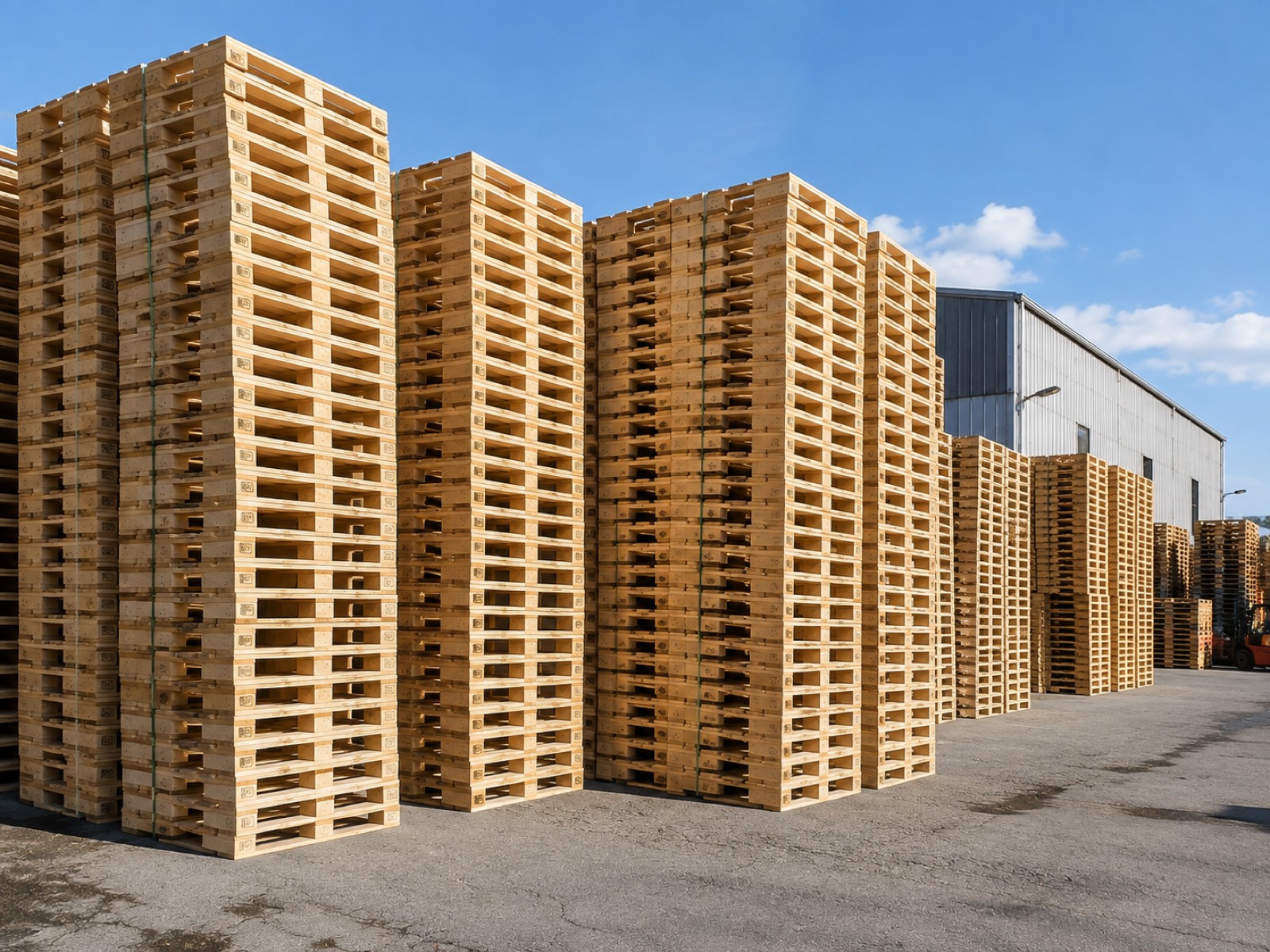
1. Collection
It starts at your dock. Scheduled or on-demand pickups gather your empty and damaged pallets, which are counted and loaded so your space stays clear and you have a record of what left.
2. Sorting
At the facility, incoming pallets move through a triage line and are separated by size, style, and condition. Sound units head straight for cleaning and re-inventory; repairable units go to the repair line; and units beyond repair are set aside for dismantling.
3. Repair
Repairable pallets get new life one board at a time — cracked deck boards and split stringers are replaced with reclaimed or new lumber, and the unit is re-nailed to spec. A single repair often returns a pallet to service for years, which is the whole economic engine of recycling.
- Deck board replacement
- Stringer repair or plating
- Re-nailing to spec
- Re-inspection before re-grade
4. Re-grade and return
Repaired and sound units are graded (A, B, or remanufactured) and returned to inventory, ready to ship to the next customer. This is the moment a "waste" pallet becomes a sellable product again.
5. Grinding true end-of-life wood
Only wood that genuinely cannot be reused gets ground down — into landscape mulch, animal bedding, or biomass fuel. Even here the material is recovered rather than landfilled, closing the loop on the small fraction that cannot be repaired.
What happens to the boards and nails
Dismantling a spent pallet is more than breaking it apart. A dismantler runs the unit through a device that separates the deck boards from the stringers with minimal splitting, so the maximum number of boards survive intact. Those salvaged boards become the raw material for repairs and remanufactured pallets, which is why a well-run yard can supply most of its own repair lumber from wood that has already been in service.
The metal does not go to waste either. Nails, staples, and stringer plates pulled during dismantling are collected as scrap steel and sent for metal recycling rather than landfill. It is a small stream by weight, but it means even the fasteners in a retired pallet re-enter a material loop. The combination of board salvage and metal recovery is what lets a facility claim that very little of an incoming pallet is truly discarded.
- Deck boards salvaged for repairs and remanufactured pallets
- Stringers reused or plated where sound
- Nails, staples, and plates recovered as scrap steel
Counting, tracking, and reporting the loop
Behind the physical process runs an information process that is easy to overlook but commercially important. Pallets are counted at pickup and again at intake, sorted quantities are logged by grade, and repaired and returned units are recorded. This is what lets a customer see how many of their pallets came back to service versus how many were retired, and it turns a hauling service into an auditable program.
That tracking feeds two things at once: your invoice and your sustainability numbers. Accurate counts mean you pay for what actually moved and get credited for surplus you sold back, while the same data supports diversion and reuse figures for reporting. A recycler that cannot tell you where your pallets went is only doing half the job.
How your dock affects the whole process
The efficiency of everything downstream is shaped by what happens at your loading dock before a truck ever arrives. Pallets stacked neatly by rough type, kept out of the rain, and staged in an accessible spot load faster, sort cleaner, and yield more repairable units than a wet, jumbled pile. Wet wood is heavier to haul and more prone to mold, and tangled stacks slow both pickup and triage.
A few simple habits raise the recovery rate and can improve what your surplus is worth. Keeping broken pallets separate from sound ones, avoiding mixing in non-pallet trash, and giving the driver clear access all reduce handling time. None of this requires extra staff — just a designated, covered staging area and a little consistency. We are happy to help set up a dock routine that makes each pickup smoother and each load more valuable.
- Stage pallets in a dry, covered, accessible spot
- Separate sound from broken units
- Keep non-pallet trash out of the stacks
Put this into practice
Ready to act on it? Request a quote or browse our services and products.