Dana Okafor
Published
The pallet you think is disposable isn't
Most people encounter a pallet once, at the moment a delivery arrives, and assume it heads for the trash afterward. That assumption is the root of a lot of waste. A well-managed wood pallet is one of the more reusable objects in the entire supply chain, and the question of how long a wood pallet lasts has a more encouraging answer than most expect.
In practice, a standard wood pallet that enters a good recovery system typically cycles through several distinct working lives before its wood is finally recovered into another product. Industry experience commonly points to something like five to seven cycles for a well-made pallet that is repaired when it needs it, though the exact count varies with build quality, handling, and load type.
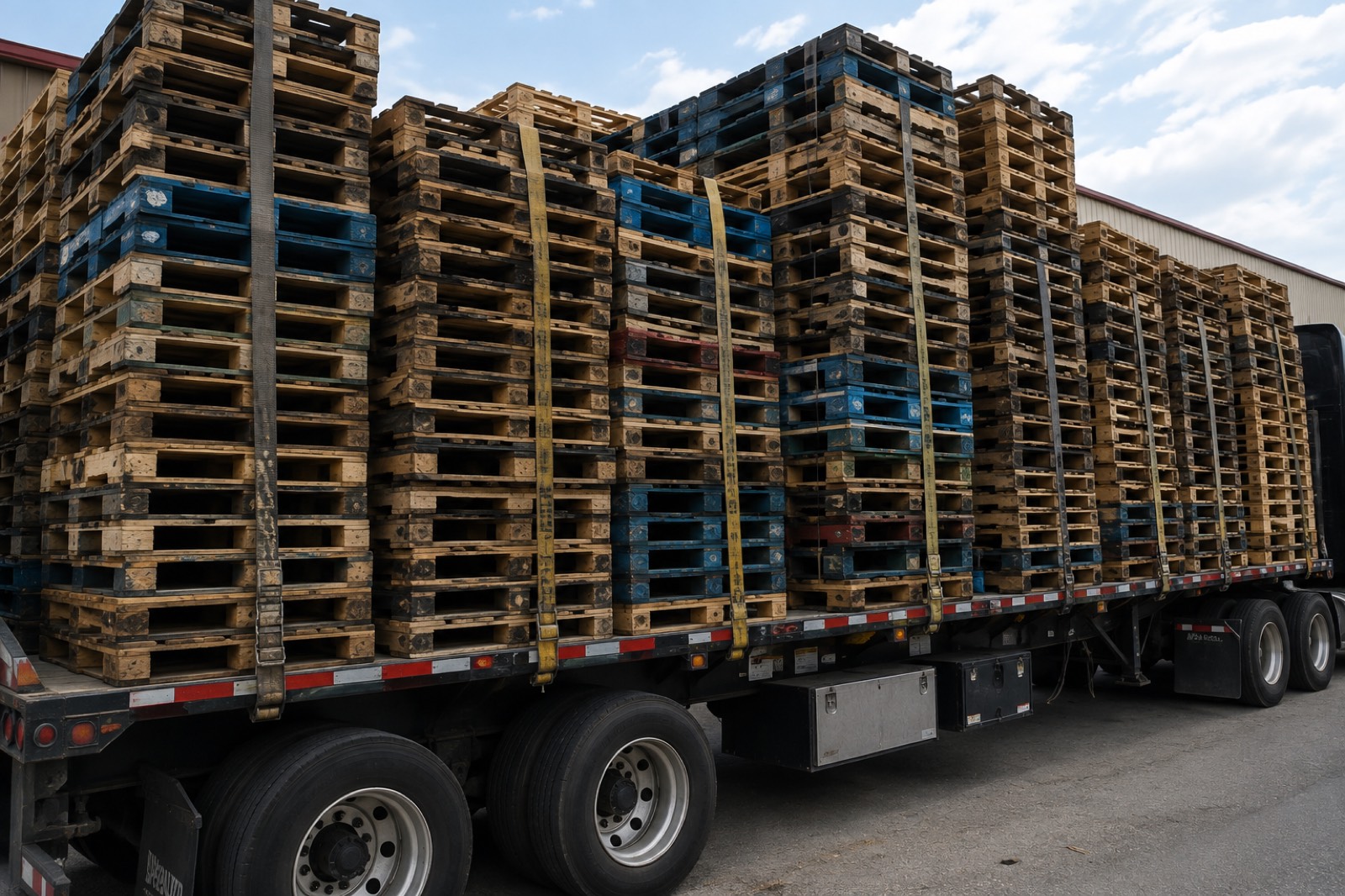
Each of those lives is a trip, or a series of trips, doing real work: carrying goods, being unloaded, and heading back out again. The pallet is not degrading toward the trash the whole time. It is doing its job, getting patched when necessary, and returning to service. Understanding that rhythm is the key to seeing pallets as durable assets rather than disposable packaging.
Life one: the first trip out
A pallet's first life is the one everyone sees. It leaves the manufacturer or a pooling yard, gets loaded, and carries goods to their destination. At this point it is in prime condition, tight and strong, and it handles the heaviest and most demanding loads without complaint. This first trip is where the pallet's embodied carbon is highest per remaining life, because the whole footprint is still ahead of only a few cycles.
What happens after that first unload determines everything. If the pallet is tossed, its story ends at life one, and its entire manufacturing footprint is charged against a single trip. If it is recovered, it begins the long journey through additional lives that makes wood pallets so efficient. The fork in the road is that first disposal decision.
This is exactly why recovery systems focus so much on capturing pallets after their first use. The first life is the easy one; the value is in all the lives that follow. A pallet program that only ever gets one trip out of each unit is leaving most of the value, and most of the sustainability benefit, on the dock.
The middle lives: reuse and repair
The middle of a pallet's career is where reuse and repair take over. After recovery, a pallet is inspected. If it is still sound, it goes straight back out, no work needed, in the tightest possible loop. If it has a cracked board or a loose stringer, it gets repaired and then goes back out. Either way, it enters another life.
This is the phase that stretches a pallet across many trips. A board here, a fastener there, and the pallet keeps working. Because the repairs are small and the reuse is direct, these middle lives are extremely carbon-efficient. Very little new material or energy goes in, and several more trips of useful work come out.
The middle lives are also where the economics shine. A repaired pallet costs a fraction of a new one, and each additional life spreads the original manufacturing footprint across another trip. This is the compounding benefit of reuse: every cycle makes the previous investment look smarter. The pallet that lives seven lives is roughly seven times as efficient, per trip, as the one that lived just one.
Remanufacture: building new from old
Eventually some pallets deteriorate past the point where a simple repair will do, but they still contain plenty of sound wood. Rather than discard these, a recycler can remanufacture them, harvesting the good boards and stringers and combining components from several tired pallets into rebuilt, serviceable units.
Remanufacture is a slightly wider loop than repair, because it involves disassembly and reassembly, but it still preserves the wood and much of the original structure. A remanufactured pallet is essentially a new working life assembled from the surviving parts of older ones. It keeps material in circulation that would otherwise have been ground up or thrown away.
The stages a pallet passes through over its full career typically look like this:
- First life: brand-new pallet on its first trips, handling the toughest loads.
- Reuse lives: recovered and sent straight back out with no repair needed.
- Repair lives: a failed board or stringer is replaced and the pallet returns to service.
- Remanufactured life: sound parts from several worn pallets are rebuilt into serviceable units.
- Material recovery: the wood is finally ground into mulch, bedding, fiber, or fuel.
The final life: material recovery
When a pallet's wood can no longer serve as structure, its last life begins as raw material. As covered in our post on end-of-life wood, the boards are ground into mulch, animal bedding, fiber, or biomass fuel. The pallet is gone, but the wood is not wasted. Its carbon stays in play a while longer, and it is kept out of the landfill where it would release methane.
This final life is what closes the loop cleanly. A pallet that reaches material recovery has given essentially everything it could: multiple trips of structural service followed by a useful second act as feedstock. That is a dramatically better outcome than a single trip followed by burial, both economically and environmentally.
Seen across all its lives, a single pallet is a small marvel of efficiency. One tree's worth of wood does years of hauling work and then becomes mulch for a garden. That is the circular economy operating quietly, one ordinary pallet at a time.
Getting more lives out of your own pallets
The number of lives a pallet achieves is not fixed by fate; it is shaped by how it is handled. Careful loading, decent forklift discipline, and prompt recovery all extend a pallet's career, while rough handling and quick disposal cut it short. Small operational habits add up to meaningful differences in trips per pallet.
The most important habit is simply capturing pallets instead of discarding them. A pallet cannot live its second life if it went in the dumpster after its first. Setting up reliable recovery is the single biggest thing most operations can do to unlock the extra lives their pallets are capable of.
If you want to understand how many lives your pallets are currently getting, and how many they could be getting, the Evergrain team can help you set up recovery that keeps them cycling. A quick email is enough to start the conversation about turning single-trip pallets into multi-life assets.
Put this into practice
Ready to act on it? Request a quote, explore our services, or keep reading on the blog.