The Evergrain Team
Published
From a straight line to a loop
The traditional economy runs on a straight line: extract raw material, make a product, use it, and throw it away. Every arrow points toward the landfill. The circular economy proposes something different. Instead of a line, it draws loops, keeping products, components, and materials in use at their highest possible value for as long as possible, and treating disposal as a failure rather than a plan.
The circular economy for pallets is one of the least abstract examples you can find. A pallet is a durable, standardized, repairable physical asset that changes hands constantly. It is practically built to circulate. Where a soda can is designed for one use, a wood pallet is designed, whether the maker intended it or not, to loop through many.
Understanding circularity as a set of loops rather than a single recycling bin is the key mental shift. Recycling is only one loop, and not the tightest one. The tighter loops, reuse and repair, keep more value in play and use less energy, which is why circular thinking favors them first.
The loops, from tightest to widest
Circular economy thinking arranges the options for a physical asset into nested loops. The inner loops preserve the most value and require the least energy, while the outer loops recover material but sacrifice the structure you already paid to build.
For a pallet, those loops look like this, moving from the most value-preserving inward loop outward:
- Reuse: the whole pallet goes back into service unchanged, the tightest and cheapest loop.
- Repair: a failed component is fixed so the asset keeps working.
- Remanufacture: sound parts from several units are combined into rebuilt pallets.
- Recycle: the wood is broken down into mulch, fiber, or bedding, recovering material but not structure.
- Recover energy: as a last resort, the wood is burned for energy rather than buried.
Why inner loops beat outer loops
It is easy to assume recycling is the greenest option because it is the one most people know. In circular economy terms, recycling is actually a relatively wide, lossy loop. When you grind a pallet into mulch, you throw away all the labor, energy, and design that went into cutting and assembling those boards. You recover the material but destroy the structure.
Reuse keeps the structure intact, which is why it is the tightest and most efficient loop. Repair is next, preserving most of the structure while fixing the weak point. Each step outward, from reuse to repair to remanufacture to recycling, discards a little more of the value you already created. The circular strategy is to stay in the innermost loop the asset's condition allows.
This ranking has real operational consequences. A company that grinds every returned pallet into mulch might feel virtuous, but it is likely destroying reusable value it could have captured. The circular-minded operator sorts first, reuses what can be reused, repairs what can be repaired, and only grinds what truly cannot serve any higher purpose.
Circularity as asset management, not waste management
One of the most useful reframes is to stop treating pallets as waste and start treating them as circulating assets. Waste is something you pay to get rid of. An asset is something you manage to extract value from over time. That single shift in framing changes budgets, incentives, and behavior across an organization.
When pallets are assets, you start caring about their trip count, their condition on return, and where they end up. You build relationships with recovery partners the way you would with any supplier of a valuable input. You measure recovery rates the way you measure any other operational metric. The pallet stops being an afterthought and becomes a managed resource.
This is also where circularity stops being a slogan and starts saving money. Reused and repaired pallets are cheaper than new ones, and diverting them from disposal cuts waste-hauling costs. Circularity done well is not a charitable gesture, it is a more efficient way to run a physical supply chain.
What it takes to close the loop
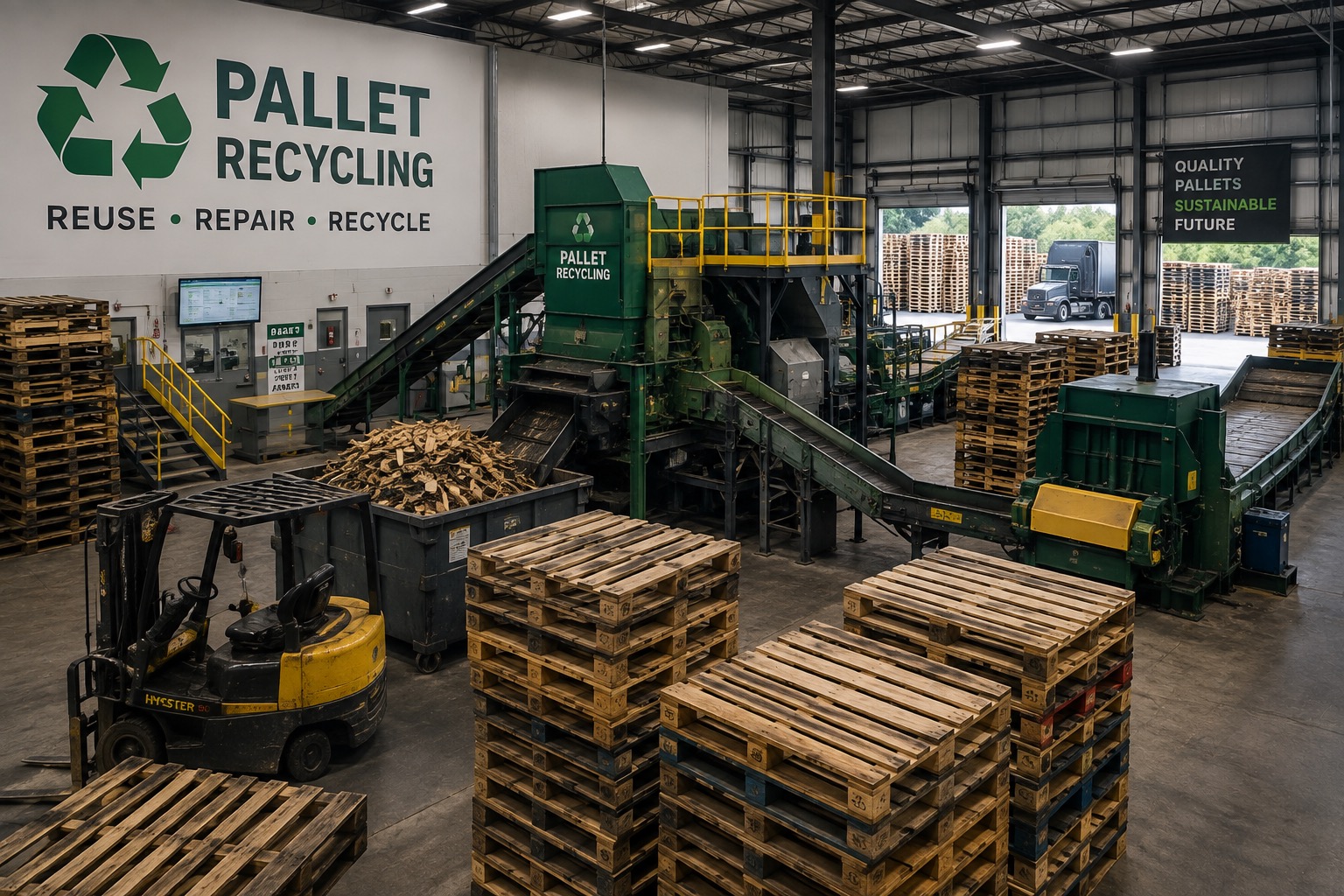
Closing a loop requires more than good intentions; it requires infrastructure. Someone has to collect the used assets, sort them, repair the salvageable ones, and route the rest to their best next use. That is the unglamorous middle of the circular economy, and it is where specialist recyclers and recovery services earn their keep.
Standardization is the quiet hero here. Because so many pallets share common sizes, they are interchangeable, poolable, and repairable with common parts. The more standardized an asset is, the easier it is to keep circulating. This is a lesson worth remembering when designing any product intended to last: uniformity enables circularity.
Businesses that want to close their own pallet loop rarely need to build all this in-house. Partnering with a recovery service like Evergrain lets you plug into an existing loop rather than reinventing it. Reach out by email if you want to understand where your pallets currently leak out of the loop and how to plug the gap.
The mindset that makes it stick
Circular economy programs fail when they are treated as one-off sustainability projects and succeed when they become the default way of operating. The goal is not a splashy launch, it is a boring, reliable loop that keeps turning after the press release fades. Durability of the process matters as much as durability of the product.
That durability comes from aligning incentives so the circular choice is also the convenient and economical choice. When reusing a pallet is cheaper and easier than buying and dumping one, people reuse without being nagged. Good circular design removes the friction that pushes people back toward the straight line.
For physical assets like pallets, the circular economy is less a futuristic ideal than a present-day operating manual. The loops already exist, the infrastructure already works, and the economics already favor it. The main thing standing between most companies and a genuinely circular pallet program is simply deciding to run one.
Put this into practice
Ready to act on it? Request a quote, explore our services, or keep reading on the blog.